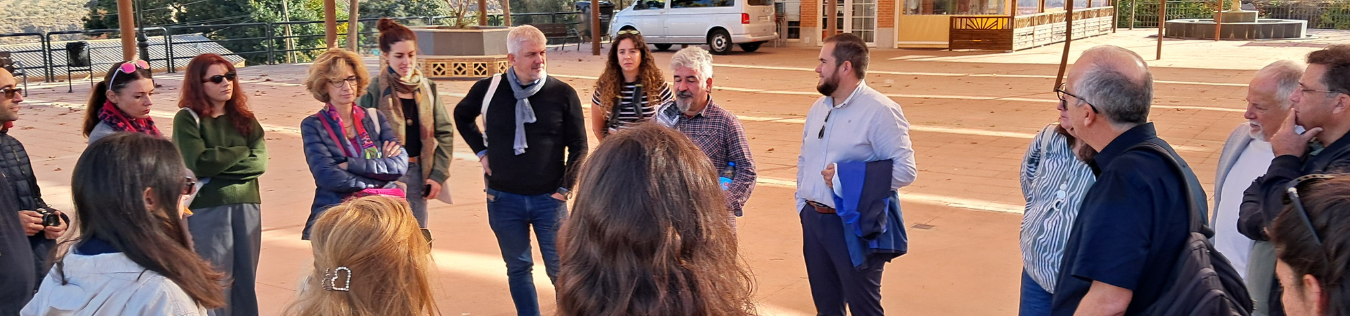

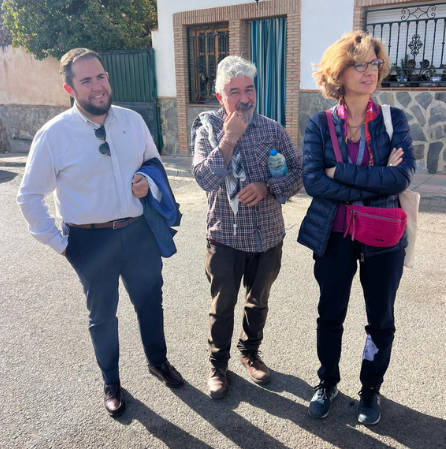
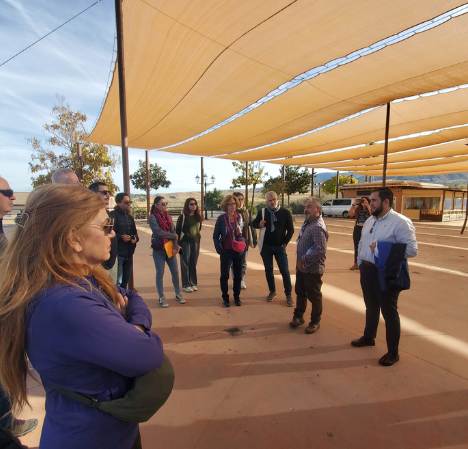
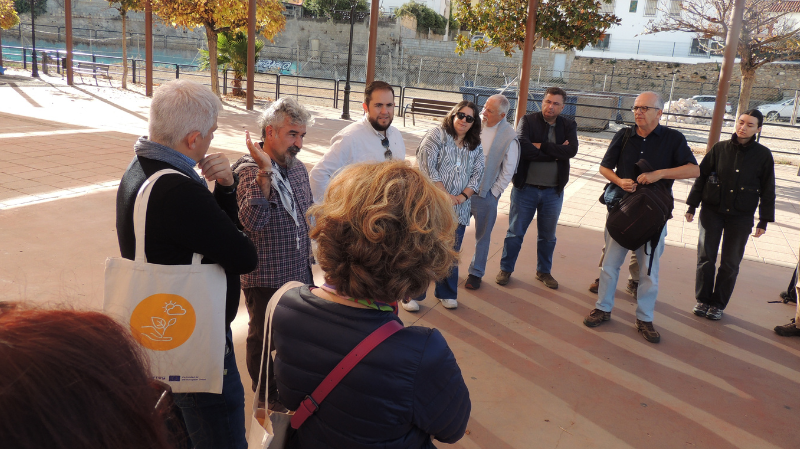
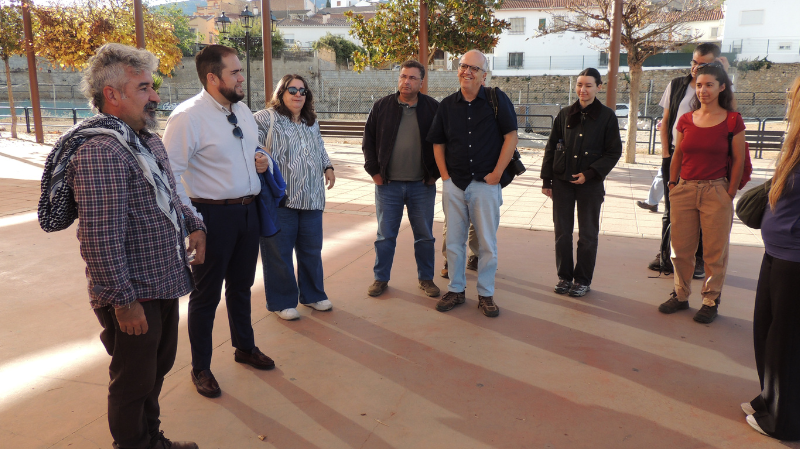
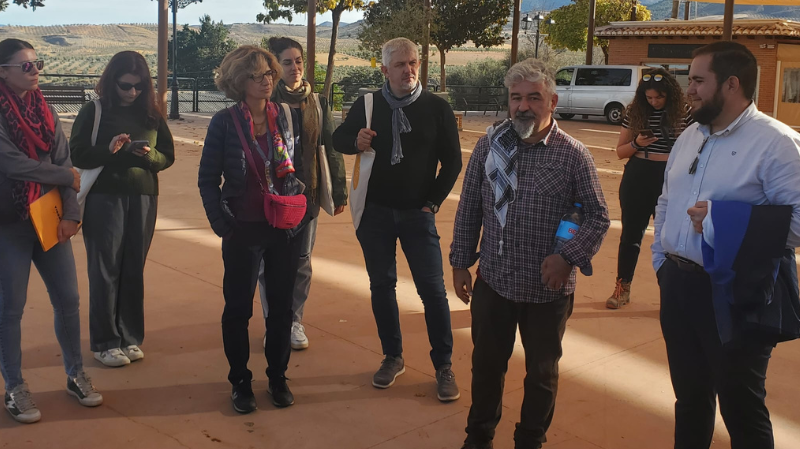
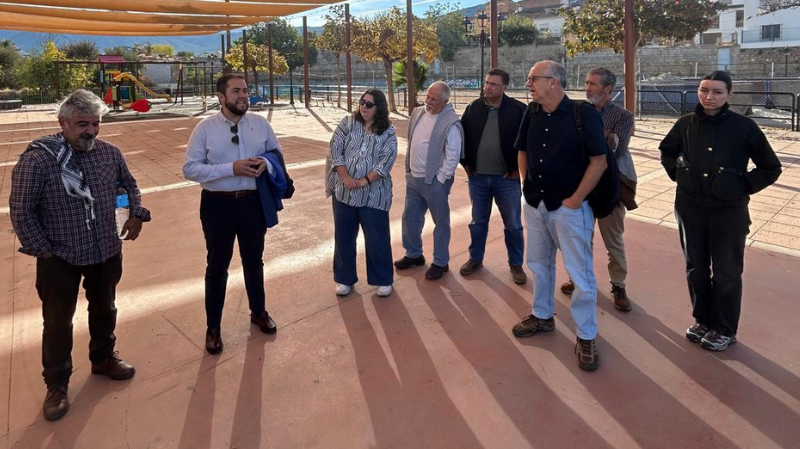
During the kick-off meeting of the European project WatHer, project partners visited Dílar Village in Granada, Spain and were welcomed by the Mayor of Dílar, Mr. José Ramón Jiménez Domínguez. The Mayor described the water-related challenges the local community faces, including issues of water-supply reliability, the impacts of climate change, and the need to reconcile preservation of traditional water systems with modern demands.
Dílar is a charming village located in the province of Granada at almost 900m altitude in the Sierra Nevada Natural Park. While Dílar’s natural surroundings and quality of life are important assets, the area also contends with water scarcity, aging infrastructure, and the challenge of sustainable development – concerns that align closely with the objectives of the WatHer project.
The visit and the discussion with Mayor Jiménez Domínguez underlined the importance of local engagement and grounded knowledge for the project’s work to restore and adapt traditional Water Heritage Systems (WHS). The Mayor’s insights provided practical context for the consortium’s planned activities on mapping, restoration, monitoring and community-based reuse of WHS in Mediterranean rural areas.
The WatHer’s project consortium expresses its appreciation to the Municipality of Dílar for its hospitality and to the Mayor of Dílar for sharing valuable local perspectives.
The lead partner of the WatHer project is Politecnico di Milano – Department of Architecture, Built environment and Construction engineering (IT), and the project partners are University of Padova (IT), University of Granada (ES), University of Algarve (PT), IN LOCO Association (PT), OTRA – Island Development Agency Ltd (HR), BSC – Business support centre Ltd, Kranj (SI), Cyprus University of Technology (CY), Laona Foundation for the Conservation and Regeneration of the Cypriot Countryside (CY), Selenica Municipality (AL), Chambre d’agriculture des Bouches-du-Rhône (FR) and Terres en villes (FR).
“Water heritage systems may be our salvation to the worsening climate changes”