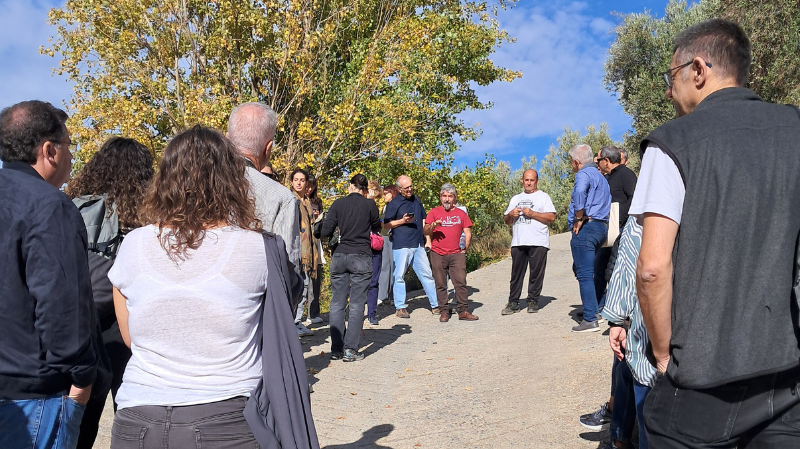
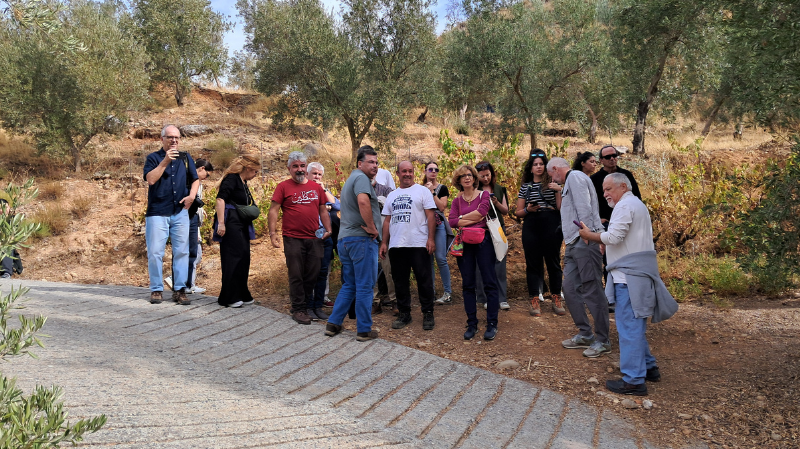
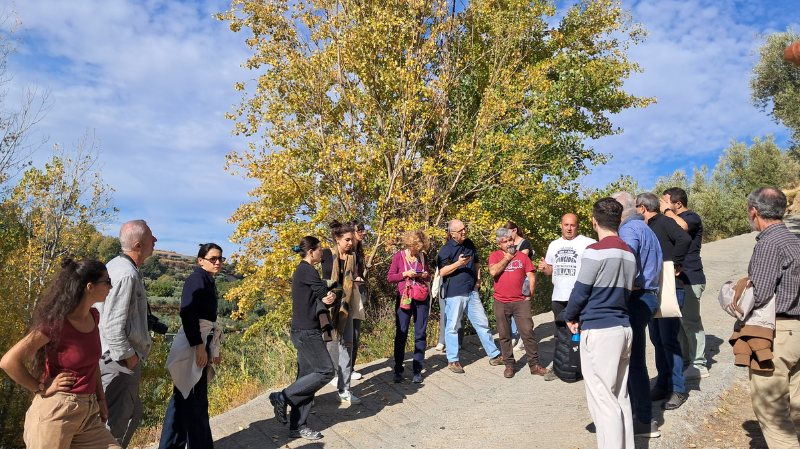
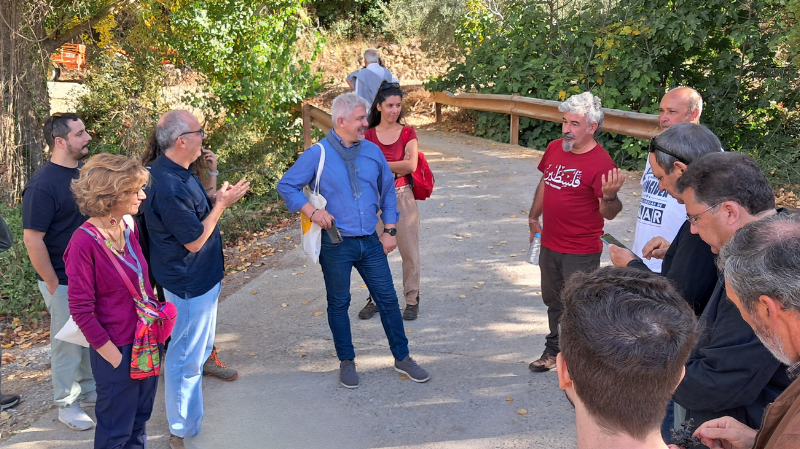
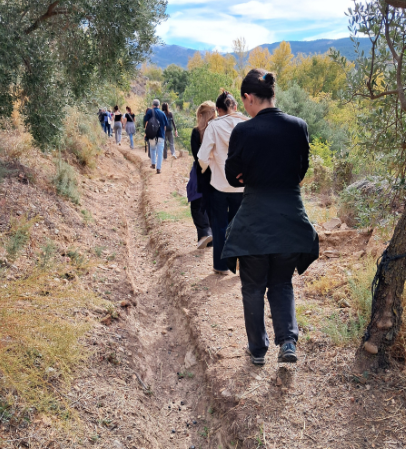
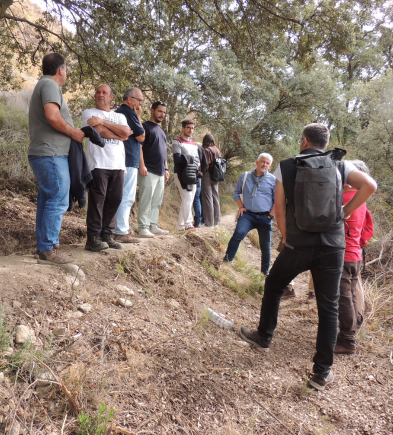
As part of the WatHer project’s kick-off meeting in Granada, partners conducted a field visit to the pilot side in Dílar, where they had the opportunity to explore the traditional water canals that will be restored within the framework of the project.
Accompanied by local representatives, the consortium visited sections of the historic irrigation network, a system of ancient ditches and channels that still distribute water efficiently across the agricultural landscape. These structures, part of the region’s Water Heritage Systems (WHS), have played a key role for centuries in ensuring the sustainable use of water resources in this water-scarce Mediterranean environment.
During the visit, the partners met with the President of the Irrigation Community Nuestra Señora de las Nieves, who shared insights into the management, maintenance, and current challenges faced by local water users. He emphasized the importance of preserving these traditional infrastructures, not only as functional irrigation systems but also as part of the area’s cultural and historical identity.
This field experience offered valuable context for the project’s upcoming restoration and monitoring activities. It also reinforced WatHer’s commitment to working closely with local communities to combine traditional water knowledge with modern technologies for long-term resilience and sustainability.
The lead partner of the WatHer project is Politecnico di Milano – Department of Architecture, Built environment and Construction engineering (IT), and the project partners are University of Padova (IT), University of Granada (ES), University of Algarve (PT), IN LOCO Association (PT), OTRA – Island Development Agency Ltd (HR), BSC – Business support centre Ltd, Kranj (SI), Cyprus University of Technology (CY), Laona Foundation for the Conservation and Regeneration of the Cypriot Countryside (CY), Selenica Municipality (AL), Chambre d’agriculture des Bouches-du-Rhône (FR) and Terres en villes (FR).
“WatHer project is an interesting opportunity to keep on working with an important heritage – testing, restoring, supporting communities, and supporting sustainability of future water management”
PHOTO GALLERY